





Answer
A short set of questions about your daily environment — on WhatsApp. No app, no clinic. Three minutes.

Trusted by leading researchers, funders & impact teams
1.88 million people die each year from conditions caused by where they work — nine million more from the environments they live in. Most never knew the risk was building. We built the first tool that measures it.
1 Based on WHO and WHO/ILO joint estimates of the work-related and environmental burden of disease.
It measures what no check-up has ever measured: the chemicals, the dust, the heat, the metals, the smoke — everything your environment loads into your body, year after year, in silence.
Not a diagnosis. A signal. The only one built around what your world is actually doing to you.
A short set of questions about your daily environment — on WhatsApp. No app, no clinic. Three minutes.
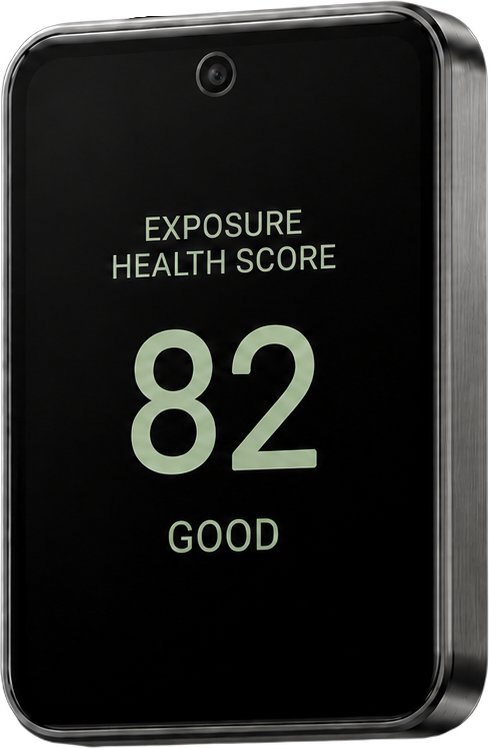
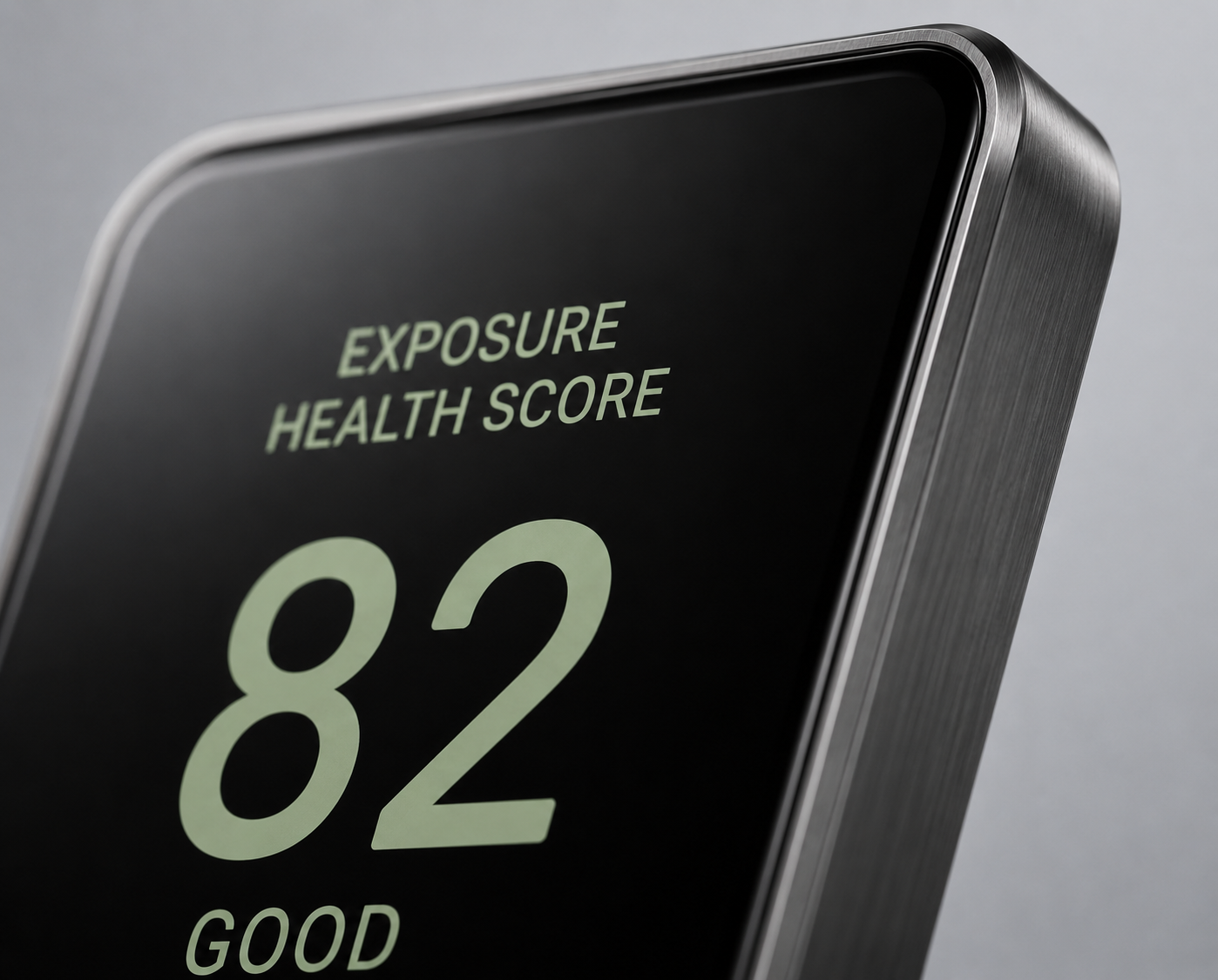
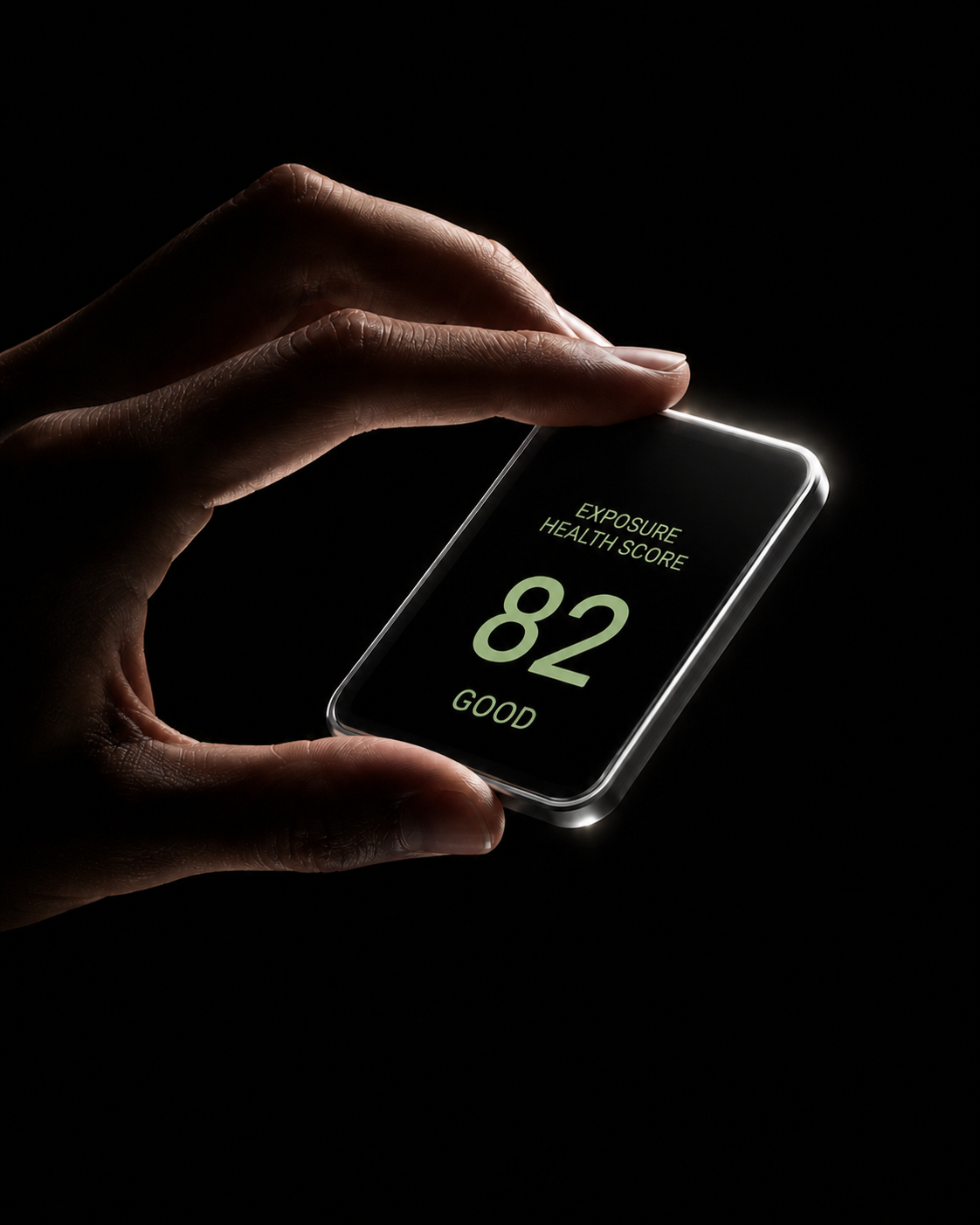
You receive your Exposure Score, 0 to 100, with a plain-language read on what it means right now.
Green means keep going. Yellow means watch it. Red routes you to a clinician — before the window closes.
You see your overall score and which exposure is pulling it down — so you know where to act, and where your clinician should look first.
Five exposure types. Each one mapped to the published evidence that proves where your environment quietly does its damage.
Read the full scienceUp to 37% of small-scale miners show signs of silicosis — disease that builds silently for years before a single symptom.
Howlett et al. · PLOS Global Public Health, 2023An epidemic of chronic kidney disease is striking farm workers in their prime — tied to heat stress and dehydration.
Johnson, Wesseling & Newman · NEJM, 2019An estimated 385 million unintentional pesticide poisonings occur each year among the world's agricultural workers.
Boedeker et al. · BMC Public Health, 2020Low-level lead exposure is linked to roughly 250,000 cardiovascular deaths a year — far more than once assumed.
Lanphear et al. · The Lancet Public Health, 2018Occupational noise accounts for about 16% of disabling hearing loss in adults worldwide.
Nelson et al. · Am. Journal of Industrial Medicine, 2005"I take the score every Monday before my shift. It is the first time anyone has tracked what the work is doing to me."
"Three minutes on WhatsApp. That was the whole thing."
"Nobody had ever asked me about my exposures before."
"My score came back low. The check-up it triggered caught something early — while it was still reversible."
"We rolled it out to 400 workers in a week — no app, no clinic. Now we see exposure risk by site."
"My employer didn't know either. Now we both do."
"One number. It changed how I think about every shift."
Join the waitlist and we'll send your first device the moment it opens.